Budgeting: How to budget as a college student, from aid refund to end of term
To budget as a college student, add up all the money you'll have for the term, divide it by the months it has to last, and spend from that monthly amount, not from the lump sum. At public four-year colleges, books, transport and personal costs alone averaged $5,140 a year in 2025-26.
 By Wealtie Team · 4 min read
Key takeaways
- A college budget starts with the term's total money, from aid refunds, loans, a job and family, divided by the months it has to cover.
- The average budget for an in-state student at a public four-year college was $30,990 in 2025-26, including $13,900 for housing and food, according to the College Board.
- On top of tuition and housing, the same students were budgeted $5,140 a year for books and supplies, transportation and other personal expenses.
- Aid often arrives in one payment per term; moving it to savings and paying yourself a fixed amount each month stops the lump from running out in week eight.
- Borrowed money spent on takeaway is repaid later with interest, so borrow for the budget, not beyond it.
How do you budget as a college student?
Add up all the money you'll have for the term, divide it by the months it has to last, and spend from that monthly figure. Then split it: fixed costs first, everything else after.
A student budget is different from a job budget in one way that matters. Money doesn't arrive every month. A financial aid refund, a loan disbursement or a family transfer often lands once a term, and the job pays in small, uneven amounts. The budget's main job is to turn a lump into a monthly amount you can live on until the next lump.
- List the money for the term. Aid refund, loan money left after tuition, job income, money from family.
- Divide by the months it has to cover. Including the last month of term, which is the one most often short.
- Take out fixed costs. Rent and utilities if you live off campus, phone, any meal plan top-up, subscriptions.
- Split the rest. Groceries, transport, books, eating out and personal spending.
How much does college cost beyond tuition?
At a public four-year college, the average in-state student budget was $30,990 in 2025-26, of which tuition was $11,950, according to the College Board.
| 2025-26 averages | Tuition and fees | Housing and food | Total student budget |
|---|---|---|---|
| Public two-year, commuter | $4,150 | $10,850 | $21,320 |
| Public four-year, in-state | $11,950 | $13,900 | $30,990 |
| Public four-year, out-of-state | $31,880 | $13,900 | $50,920 |
| Private nonprofit four-year | $45,000 | $15,920 | $65,470 |
The rest of each budget is books and supplies, transportation and other personal expenses. At public four-year colleges, those three came to $5,140 for the year. Books and supplies were $1,330 of it, and only $330 of that was course materials; the rest covers other supplies, such as a computer.
These are the amounts colleges use to set the cost of attendance, not what students spend, and grant aid lowers the real price. After grants, the College Board estimates the average in-state student at a public four-year college paid $16,200 for tuition, housing and food.
Over a nine-month academic year, $13,900 of housing and food is about $1,544 a month, and the $5,140 for everything else is about $571.
What does a college student budget look like?
Here's a worked example in round numbers. It works the same in any currency.
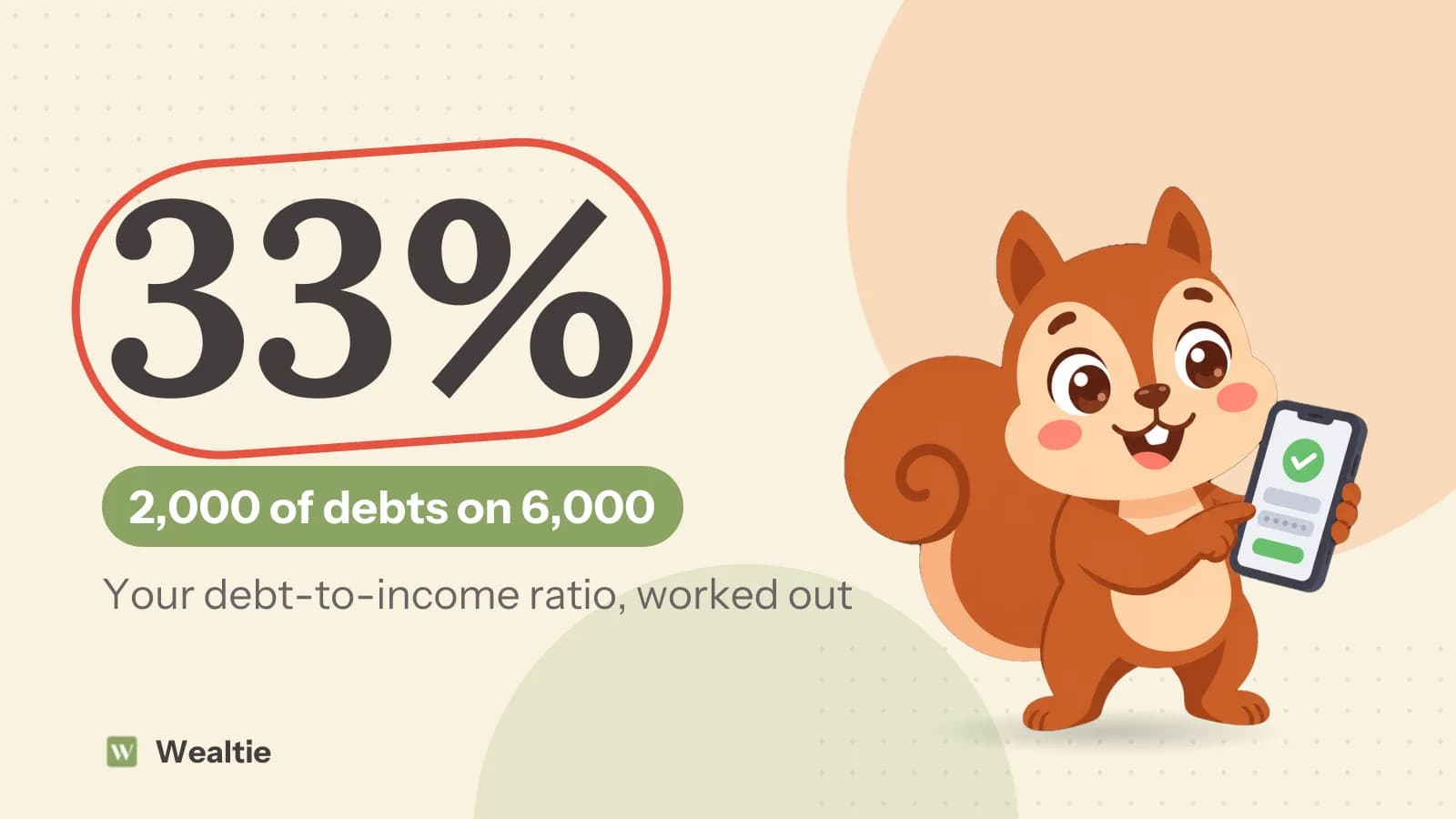
A student living off campus has four months to cover until the next term's money arrives. They have a 3,200 aid refund, a part-time job paying about 500 a month (2,000 over the term) and 400 from family. That's 5,600, or 1,400 a month.
| Monthly budget | Amount |
|---|---|
| Rent and utilities | 750 |
| Groceries | 280 |
| Phone | 40 |
| Transport | 60 |
| Books and supplies, spread across the term | 80 |
| Eating out and coffee | 70 |
| Personal spending | 120 |
| Total | 1,400 |
Groceries at 280 a month is about 65 a week. If that's tight, cooking with flatmates and planning a few dinners before each shop help more than any coupon.
What do you do with a financial aid refund?
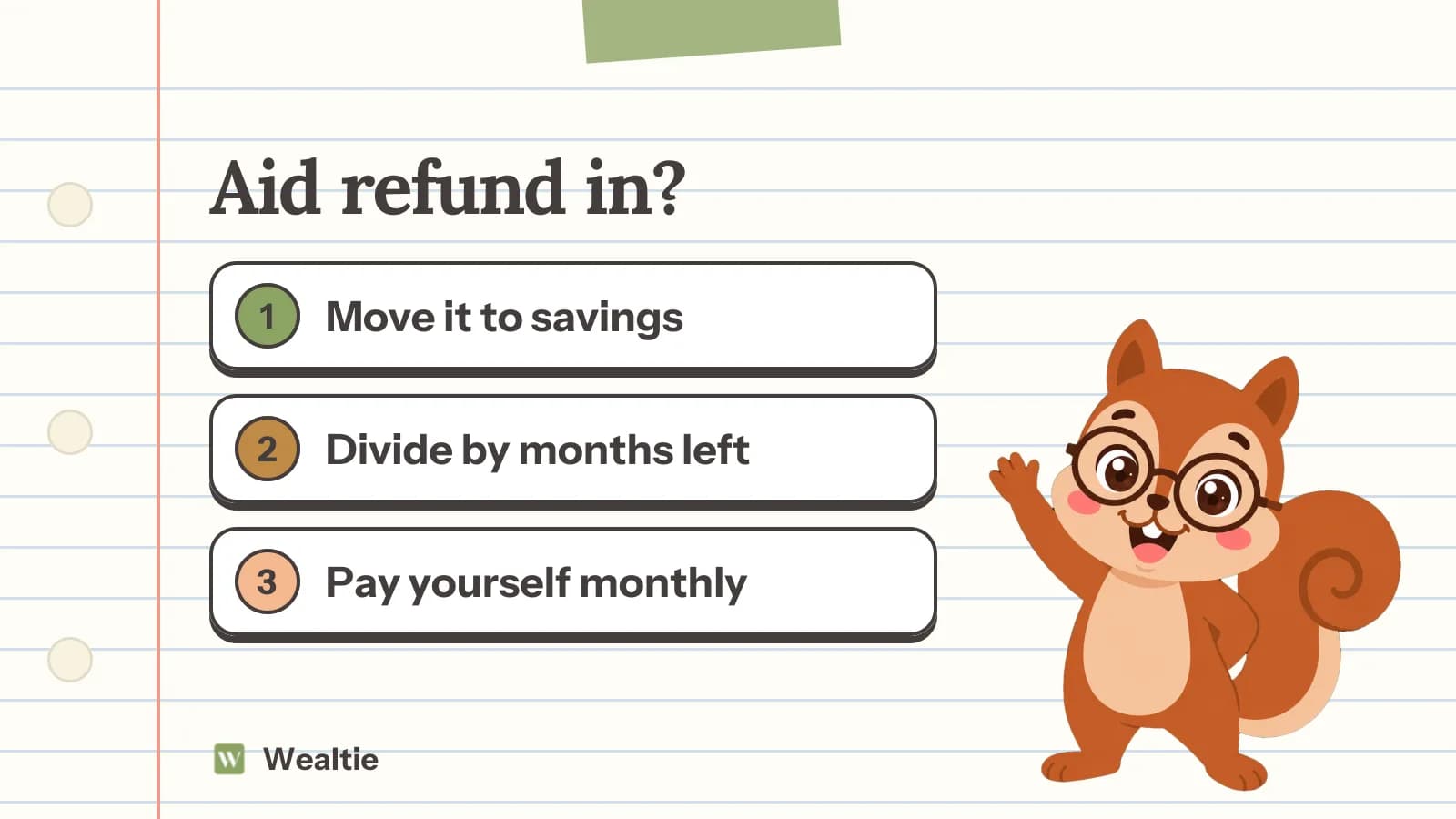
Move it to savings the day it arrives, then pay yourself a fixed amount each month.
A refund sitting in your everyday account looks like a lot of money in September and runs out in November. Instead, divide it by the months until the next one and set up a monthly transfer to your spending account. In the example, 3,200 over four months is 800 a month from the refund, topped up by the job and family money.
Keep a little back for the last month. The final weeks of term have the most expenses you didn't plan for: travel home, end-of-term events, a last textbook.
The same logic applies to any income that arrives in lumps. How to budget on irregular income sets it up in more detail.
Where do college students overspend?
Food delivery, eating out, subscriptions and textbooks, mostly in small amounts that don't feel like much at the time.
- Delivery and takeaway. Count them separately from groceries so you can see the total. It's usually bigger than expected.
- Subscriptions. Streaming, music, apps and free trials that turned into payments. Check student discounts before you pay full price.
- Textbooks. Rent, buy used or check the library before buying new. Ask whether you need the current edition.
- Buy now, pay later. Count the full price the day you buy. Four small payments still add up to the whole thing.
How to stop overspending goes through finding the categories that leak and checking your pace mid-month.
Should you borrow more to cover the budget?
Borrow for the budget, not beyond it. Student loan money is repaid later with interest, so a takeaway paid for with loan money costs more than its price.
If the monthly figure doesn't cover rent and food, that's a reason to talk to the financial aid office: aid can sometimes be adjusted when your circumstances change. If it covers the essentials but not everything you'd like, that's a budget doing its job.
A credit card can build a credit history, but only if you pay the full balance each month. Use it for one regular bill, like your phone, and pay it off on the due date.
How do you track a student budget?
Check what's left against the weeks left, not the months, and log spending as it happens.
Wealtie's Free plan has everything a student budget needs: a monthly budget, ten expense categories, and Budget Health, which warns you mid-month if your spending pace will empty the budget before the month ends. Set the budget to your monthly figure, 1,400 in the example, and log purchases in a few taps, cash included. A home screen budget widget shows what's left without opening the app, and all 11 widgets are free.
Questions people ask
Add up all the money you'll have for the term, divide it by the months it has to last, and spend from that monthly amount. List fixed costs first, then split the rest between groceries, transport, books and personal spending.
For an in-state student at a public four-year college, the College Board's 2025-26 budget comes to $30,990 a year including tuition. Over a nine-month academic year, housing and food alone is about $1,544 a month.
Move it to a savings account when it arrives, then transfer a fixed monthly amount to your spending account. Divide the refund by the number of months until the next one, and leave a little extra for the last month.
The College Board budgeted $1,330 for books and supplies at public four-year colleges in 2025-26, of which $330 was course materials and the rest other supplies, such as a computer. Renting or buying used cuts the course materials part.
Only if you pay the full balance every month. A card can build a credit history, but a balance carried at interest makes everything you bought more expensive. Set a low limit and use it for one regular bill.
Sources
- Trends in College Pricing and Student Aid 2025 · College Board · checked 1 November 2026
- Student finance for new full-time students: Maintenance Loan, 2026 to 2027 · GOV.UK · checked 1 November 2026
This article is general information, not financial, tax or legal advice. Your situation is your own; check the numbers that apply to you before you act on them.