Wealtie logoWealtie

Wealtie blog: Saving

Emergency funds, savings goals and getting money to stay where you put it.
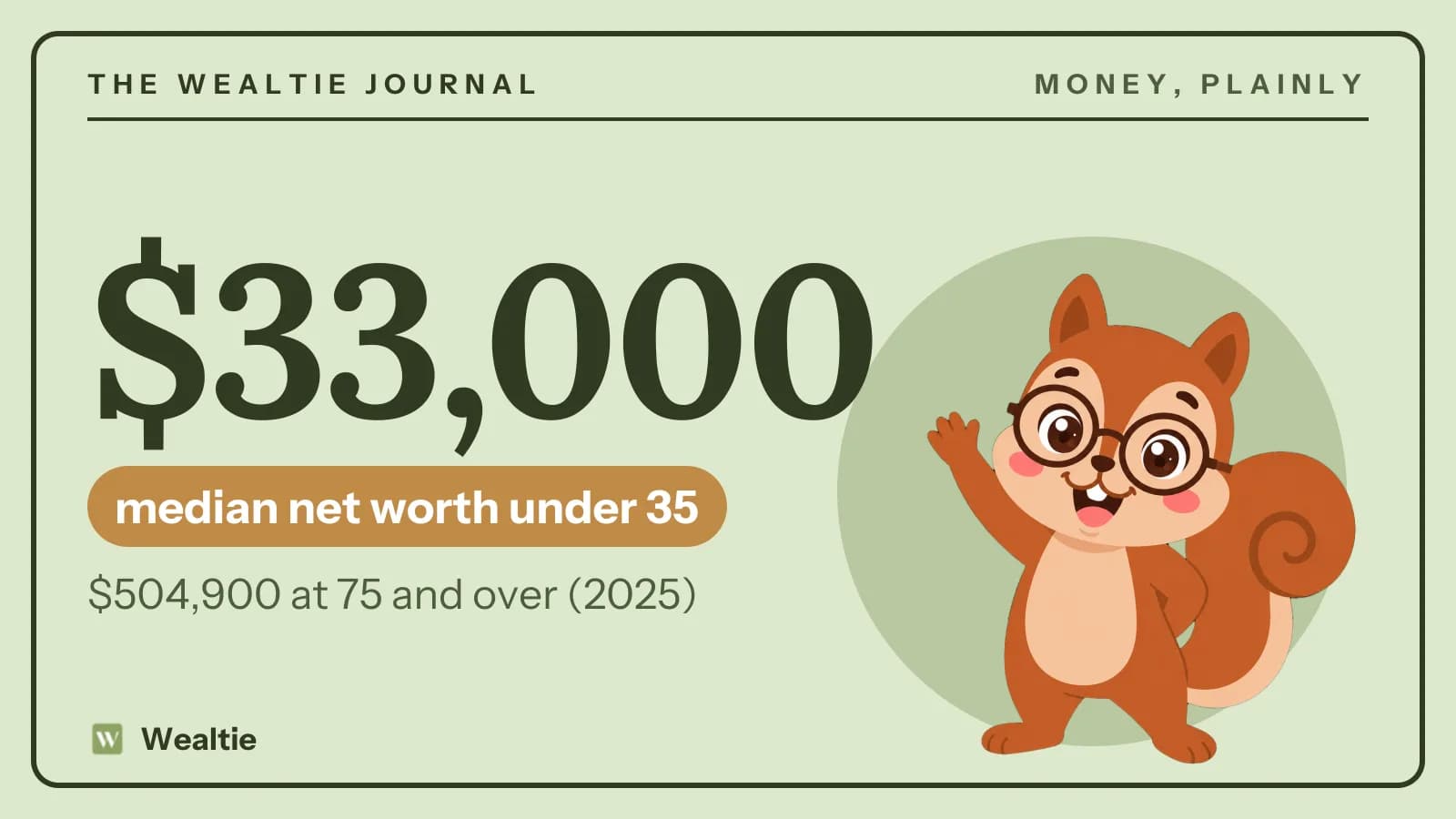
  • Wally waving beside $33,000, the median net worth of US families headed by someone under 35 in 2025, against $504,900 at 75 and over.
    SAVING

    Average net worth by age: the 2025 Fed numbers, and yours

    US families headed by someone under 35 had a median net worth of $33,000 in 2025, rising to $504,900 at 75 and over, in the Federal Reserve's Survey of Consumer Finances. That's average net worth by age; your own is everything you own minus everything you owe.

    · 3 min read
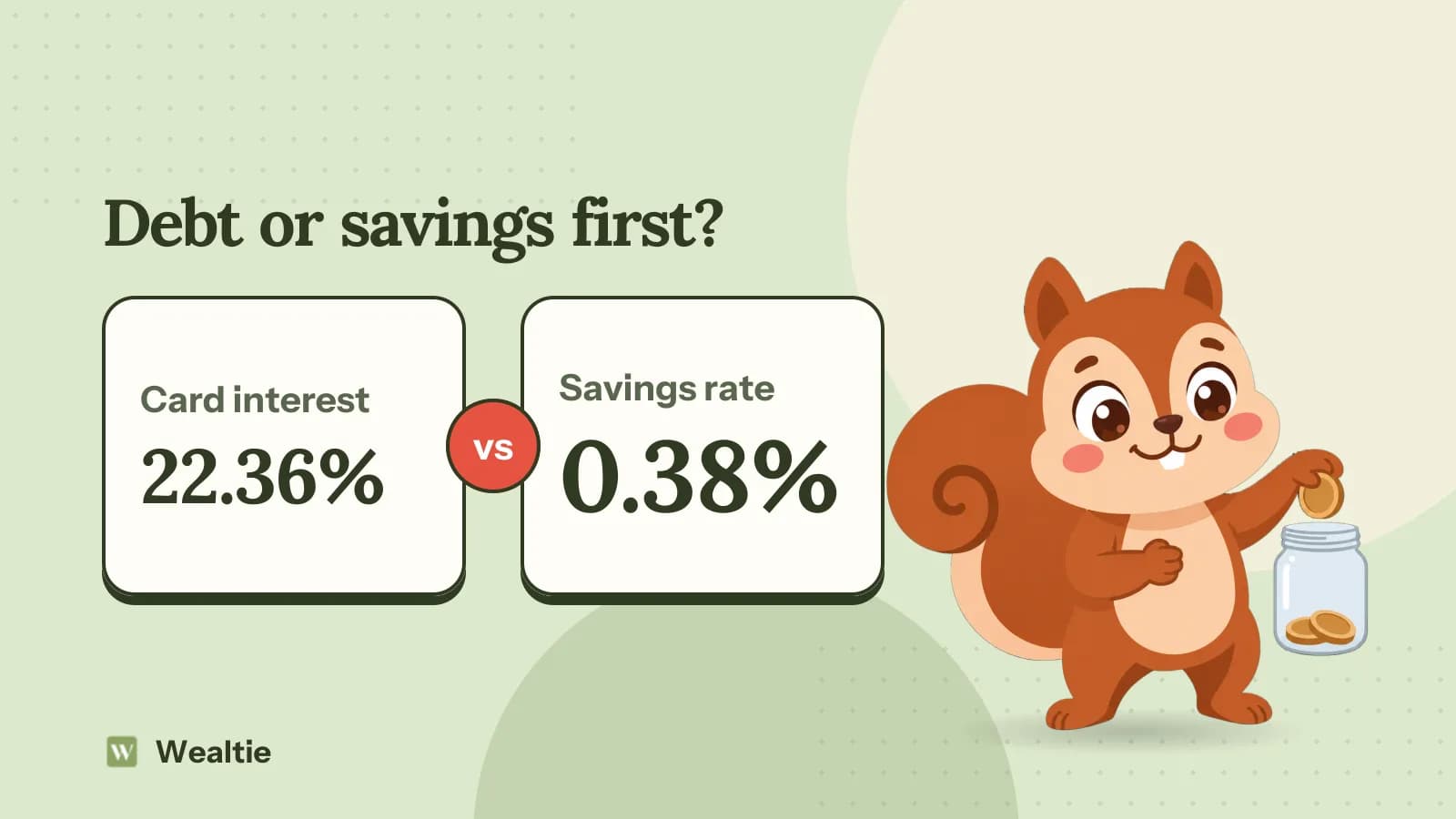
  • Wally with a coin jar beside 'Debt or savings first?': average credit card interest of 22.36% against an average savings rate of 0.38%.
    SAVING

    Should you pay off debt or save first? An order that works

    Pay off debt or save? Both, in order: a small emergency fund first, then high-interest debt, then a full emergency fund. A credit card charged 22.36% on average in August 2026 while the average savings account paid 0.38%, so every spare dollar on the card earns far more than it would saved.

    · 3 min read

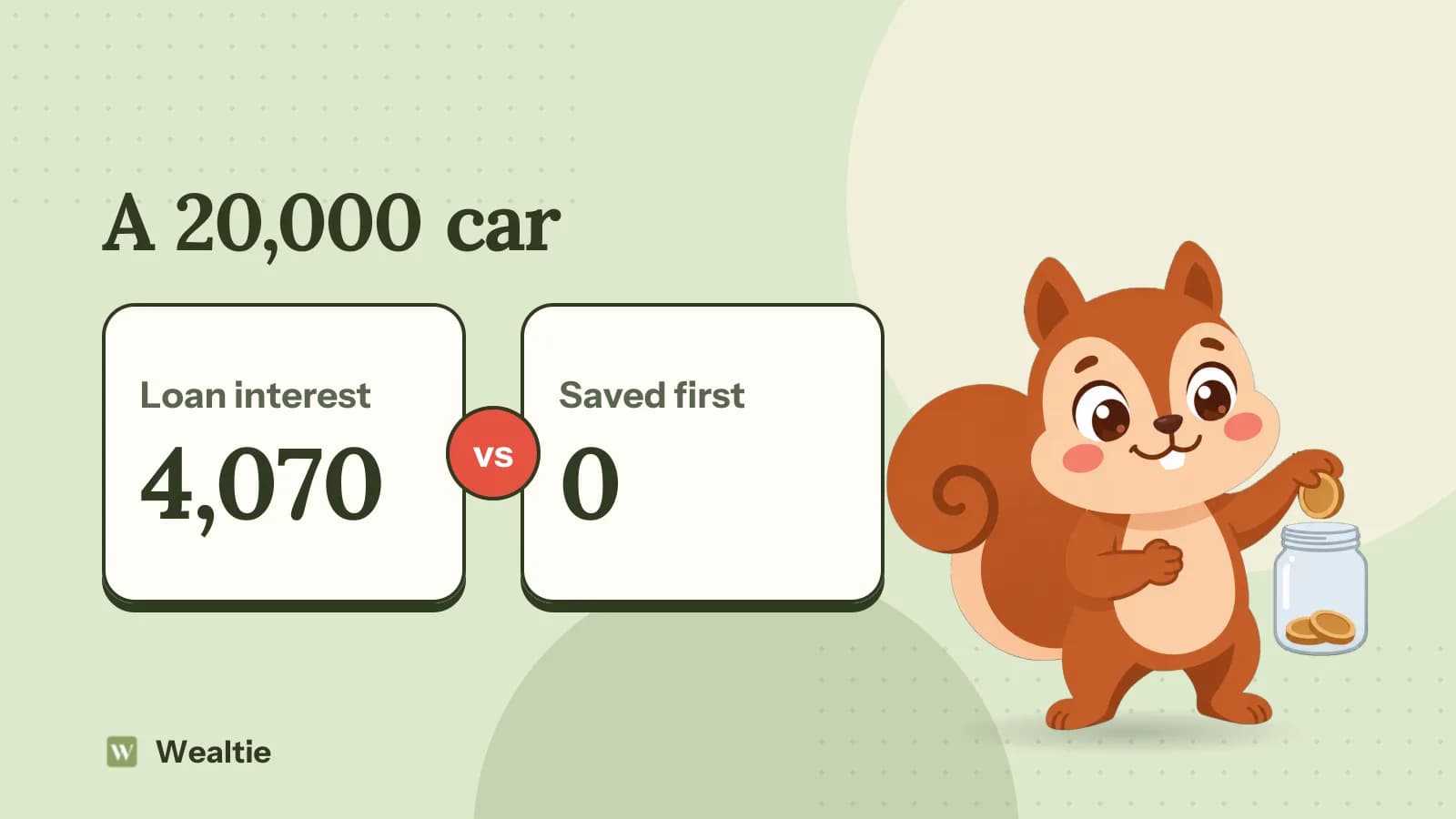
  • Wally with a coin jar beside 'A 20,000 car': about 4,070 in interest on a five-year loan at 7.54%, against nothing if the car is saved for first.
    SAVING

    How to save for a car and pay cash, or put down a big deposit

    To save for a car, pick a price, divide it by the months until you need the car, and move that amount to a separate account each payday. Saving 400 a month buys a 20,000 car in about four years; borrowing it over five years at the August 2026 average rate of 7.54% would cost about 4,070 in interest.

    · 3 min read

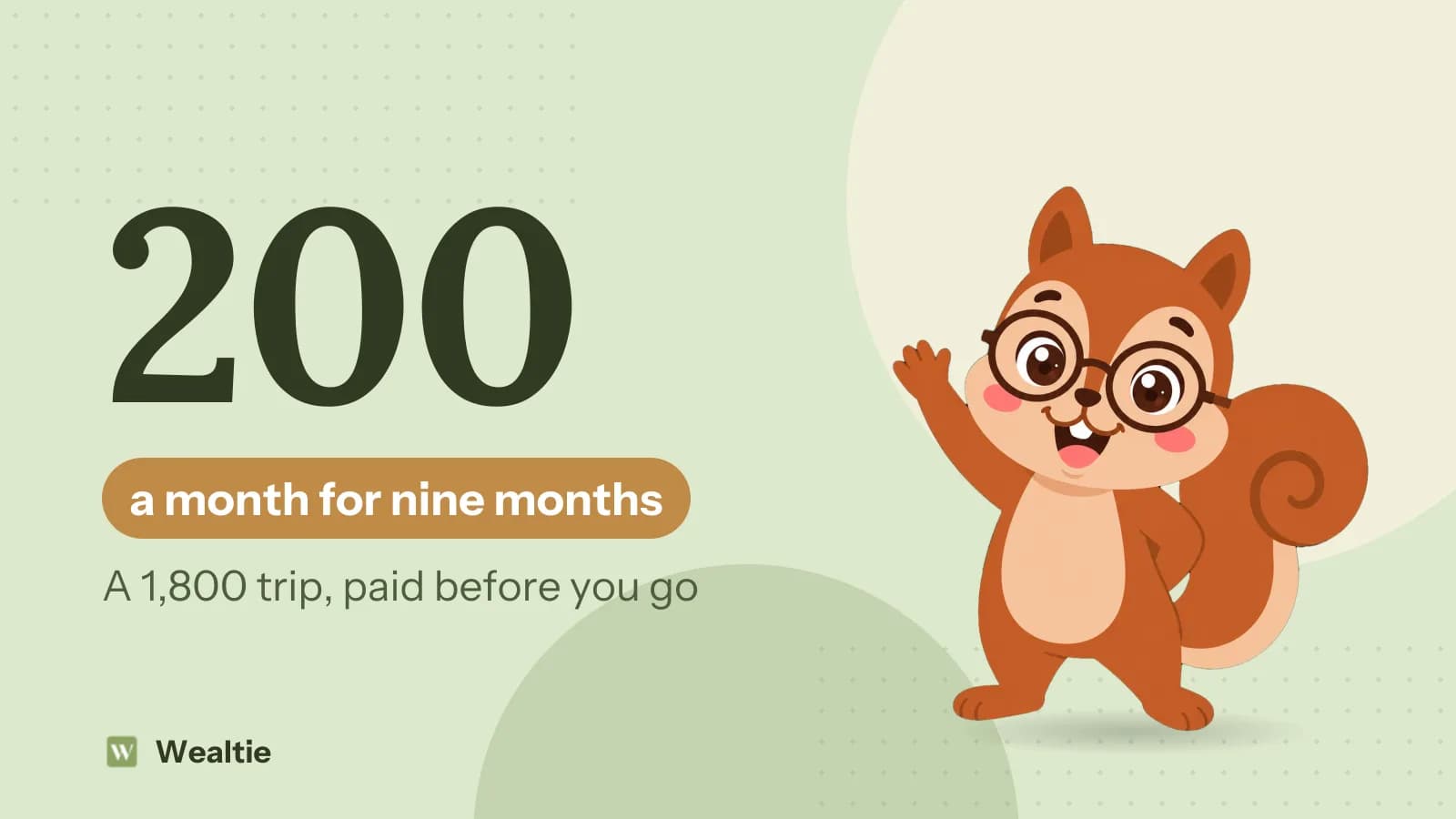
  • Wally waving beside 200: saving 200 a month for nine months pays for a 1,800 trip before you leave.
    SAVING

    How to save for a vacation: price the trip, then a monthly number

    To save for a vacation, price the whole trip first, from flights to daily spending, then divide by the months until you go. A 1,800 trip nine months away is 200 a month. Move that into a separate account each payday, and pay every deposit and booking from it, so the trip is paid for before you leave.

    · 3 min read

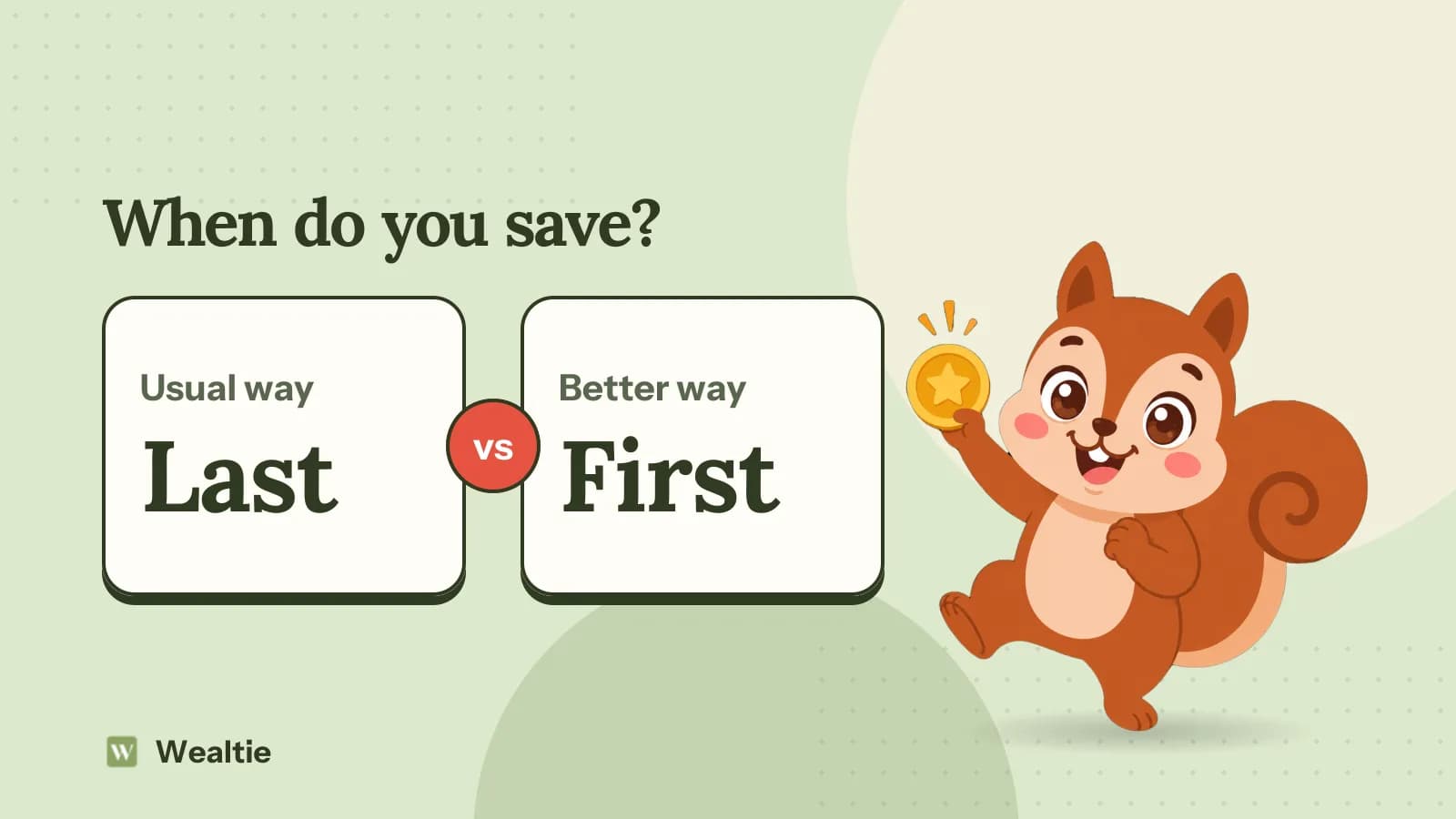
  • Wally holding up a coin beside 'When do you save?': the usual way is last, the better way is first.
    SAVING

    Pay yourself first: how to save before you spend, with numbers

    Pay yourself first means moving a set amount into savings on payday, before rent, bills or anything else, and living on what's left. Instead of saving whatever remains at the end of the month, which is usually nothing, you decide the saving first and the spending fits around it.

    · 3 min read

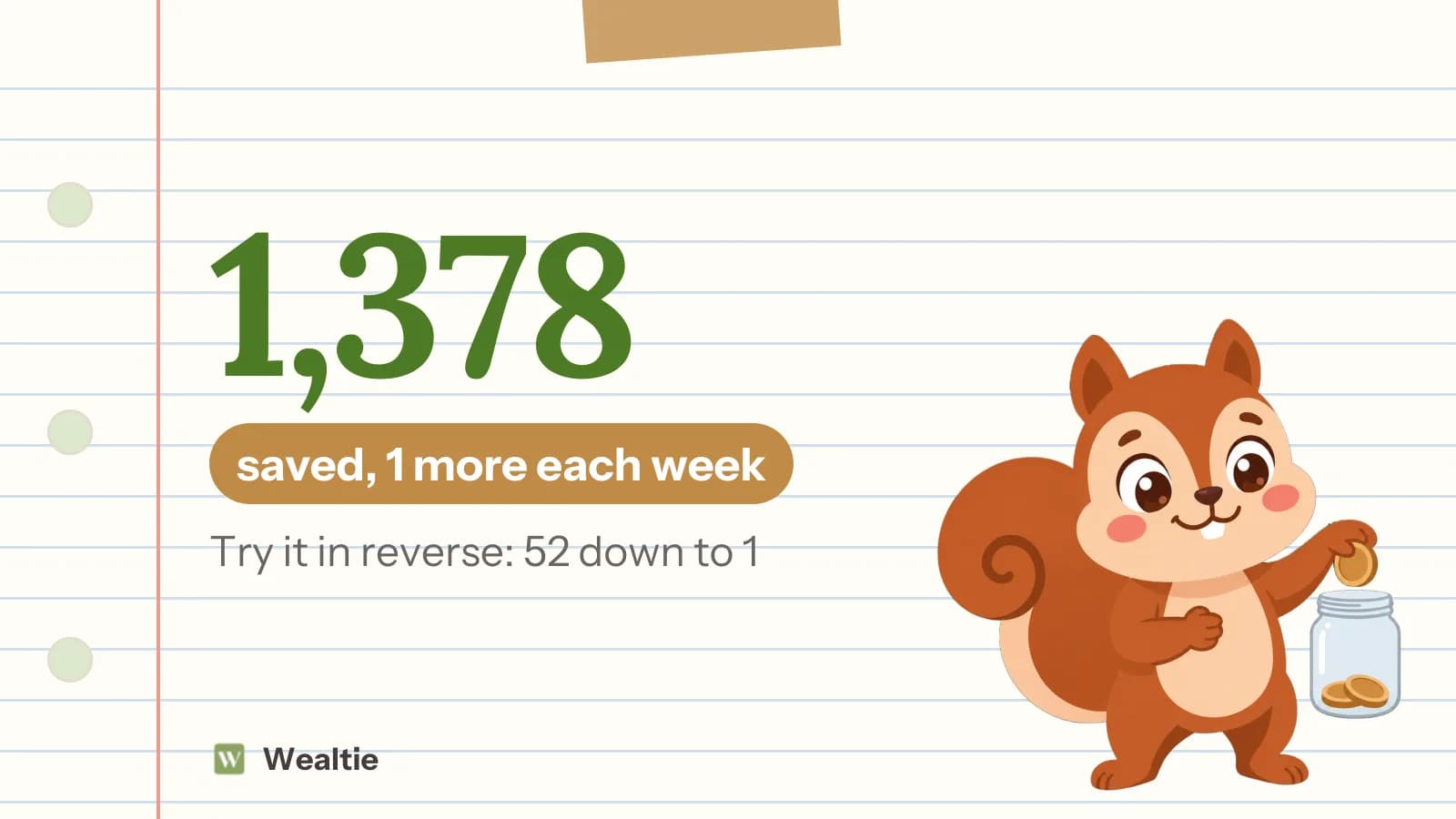
  • Wally dropping a coin into a jar beside 1,378 saved in 52 weeks, 1 more each week. Try it in reverse: 52 down to 1.
    SAVING

    52-week savings challenge: $1,378 in a year, and versions that work

    The 52 week savings challenge has you save 1 in week one, 2 in week two, and so on up to 52 in the last week, for 1,378 by the end of the year. The catch is that the biggest weeks land in December; doing it in reverse, starting at 52, puts the hard weeks first and finishes the same.

    · 3 min read

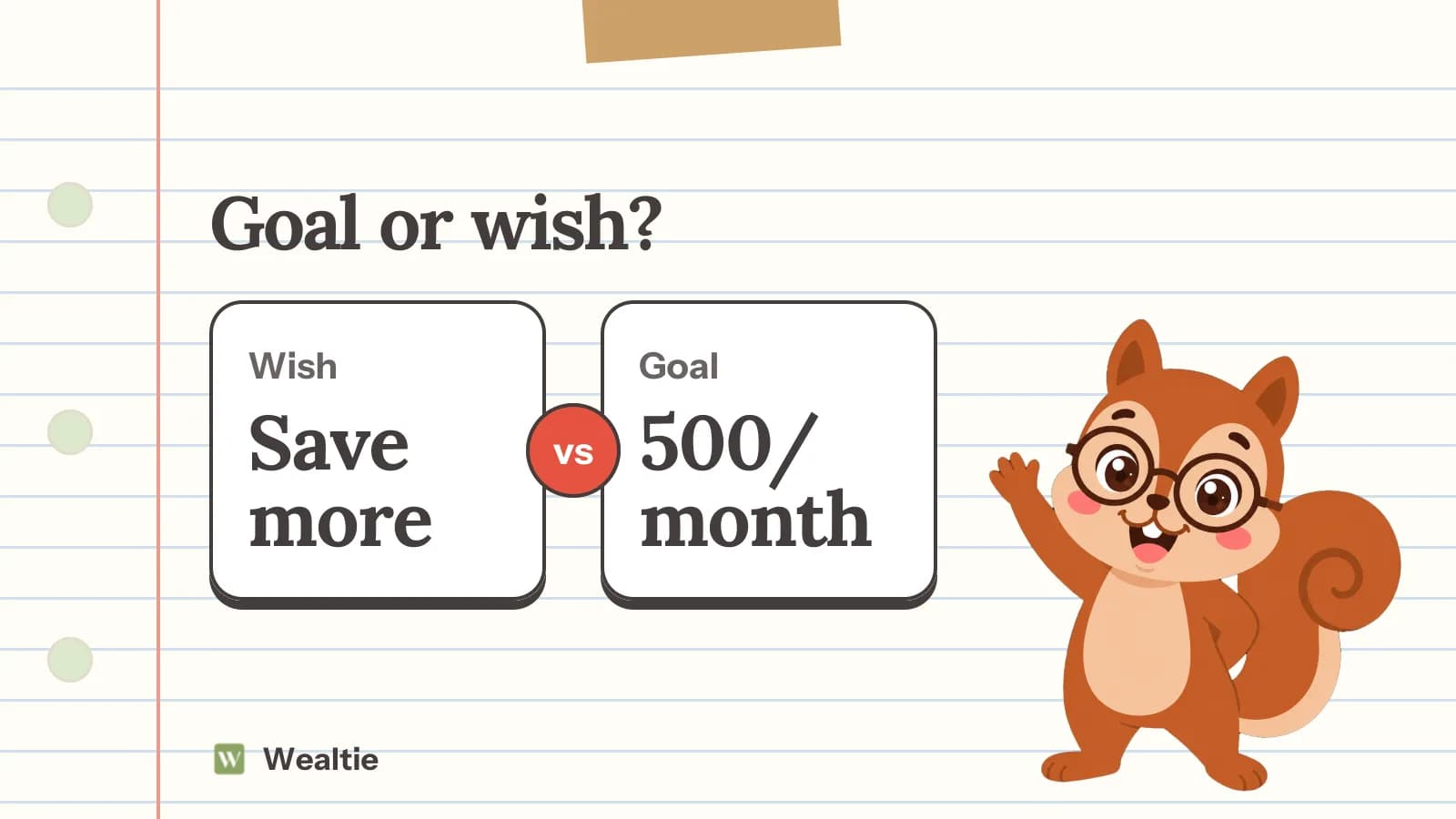
  • Wally waving beside a notebook: 'Goal or wish?' Save more is a wish; 500 a month is a goal.
    SAVING

    How to set financial goals for 2027 that you'll still have in March

    To set financial goals, pick one or two for the year, give each a number, a date and a monthly amount, and move that amount automatically on payday. "Save more" isn't a goal; "save 3,000 by July, 500 a month" is. Order matters too: a small emergency fund comes before almost everything else.

    · 3 min read

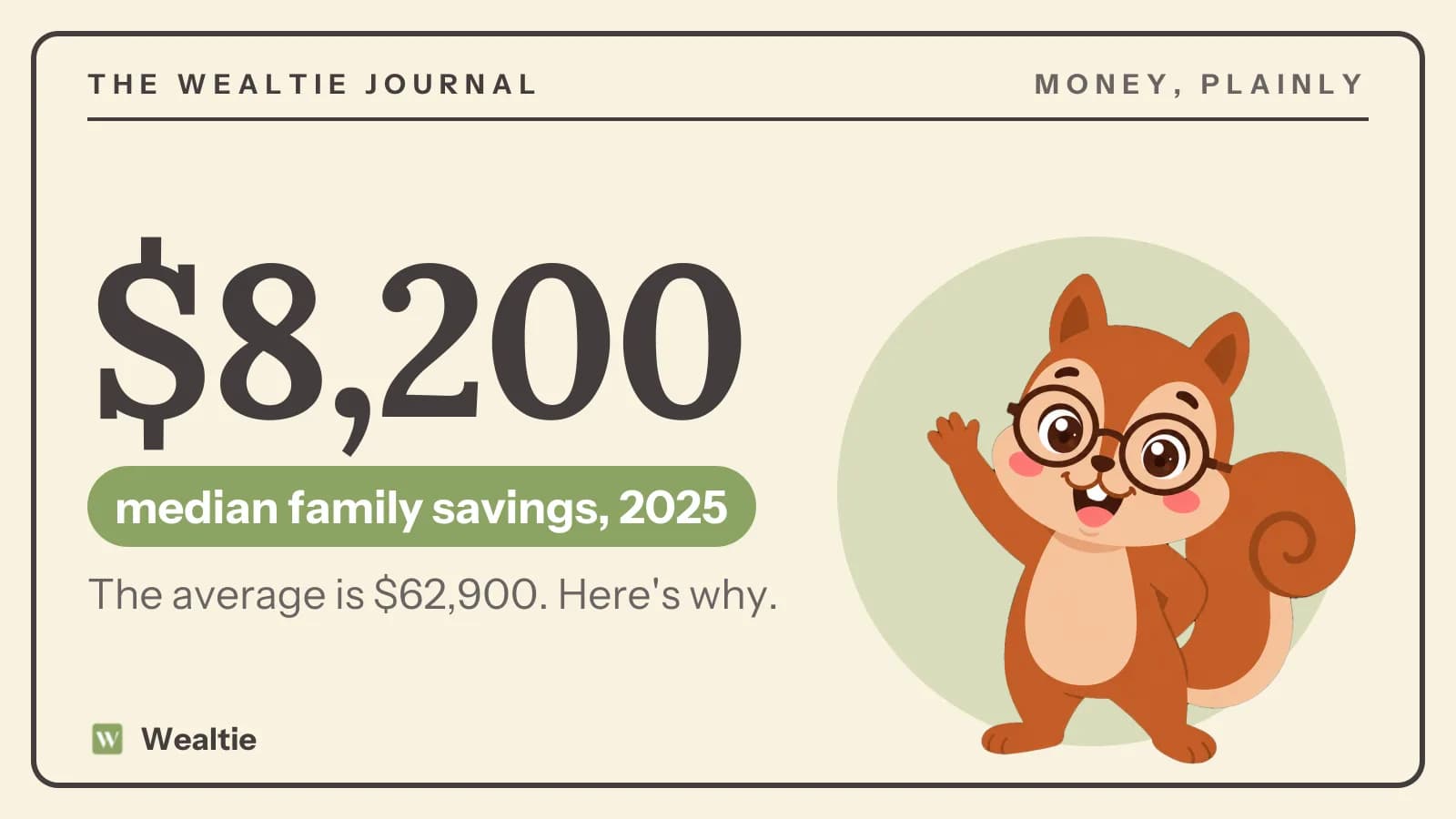
  • Wally waving beside $8,200, the median US family's checking and savings balance in 2025, against an average of $62,900.
    SAVING

    Average savings by age: what Americans have, and what to aim for

    The median family headed by someone under 35 had $5,000 in checking and savings in 2025, rising to $14,000 at 75 and over, in the Federal Reserve's Survey of Consumer Finances. Those are average savings by age; a better target is one month of income first, then three to six months of expenses.

    · 3 min read

  • Wally giving a thumbs up beside 'Emergency or not?': a broken boiler is, a car insurance renewal isn't.
    SAVING

    What counts as an emergency? A test before you touch the fund

    An emergency is a cost that's unplanned, necessary and urgent: a car repair you need to get to work, a medical bill, a lost job. If you could have seen it coming, it belongs in a sinking fund; if it can wait, it isn't an emergency. That's what counts as an emergency for your fund.

    · 3 min read

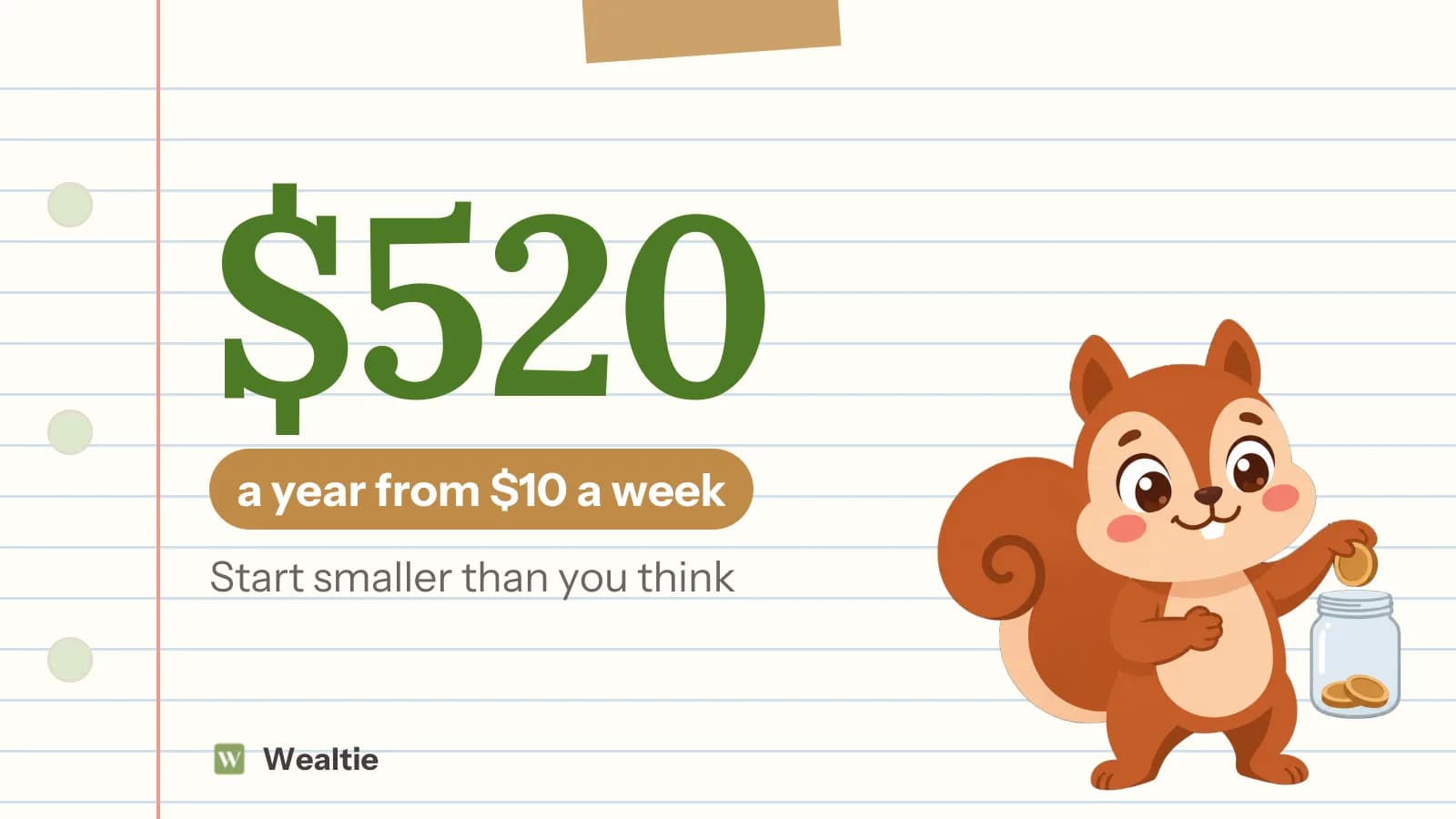
  • Wally dropping a coin into a jar beside '$520 a year from $10 a week: start smaller than you think'.
    SAVING

    How to save money on a low income, when there's little left over

    To save money on a low income, start with an amount small enough to keep every payday, even $10, and move it to a separate account before you spend. Cut fees first, save part of every windfall, and aim for a $500 buffer before any bigger goal.

    · 3 min read

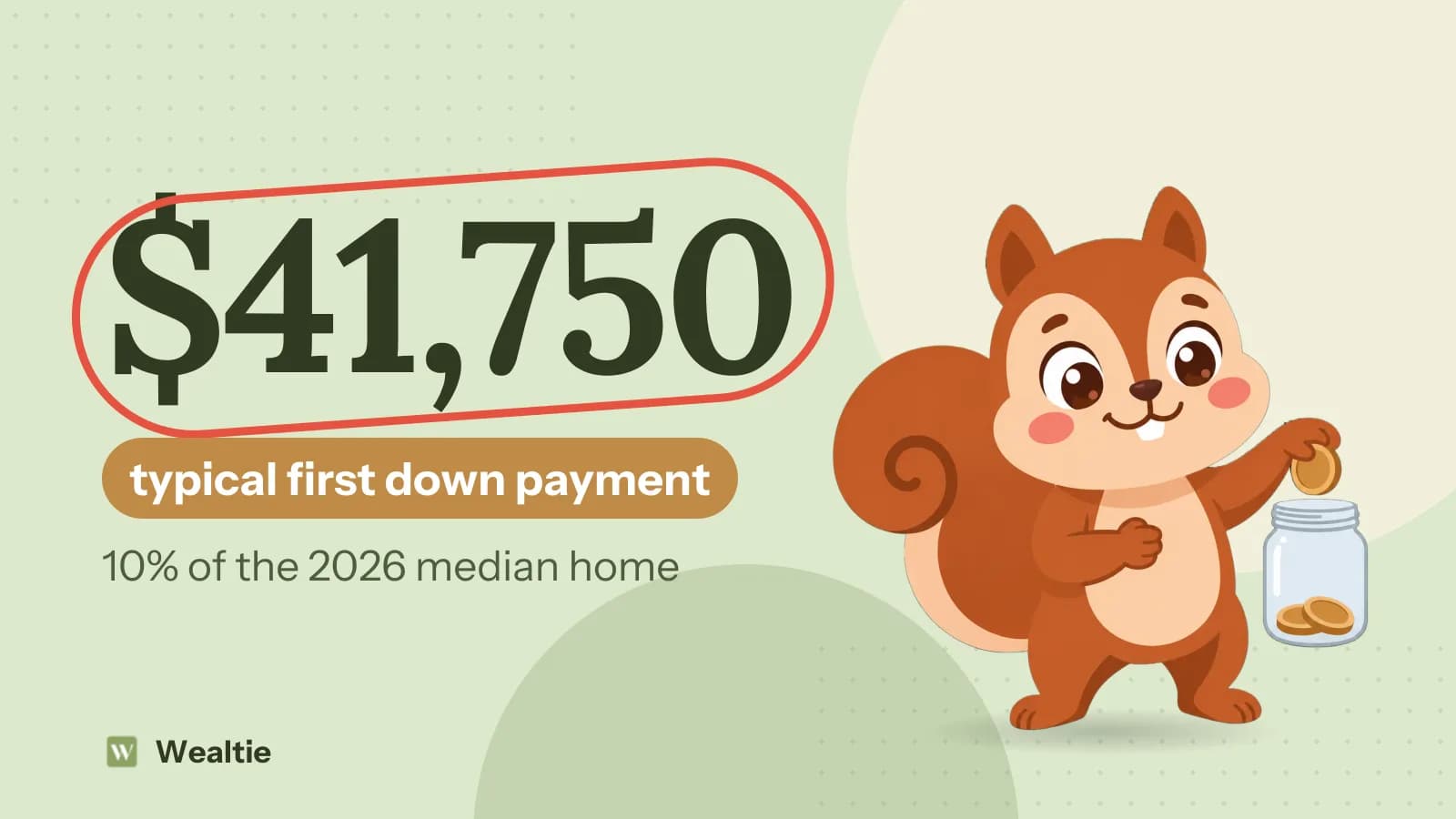
  • Wally dropping a coin into a jar beside $41,750, a 10% down payment on the September 2026 median US home price.
    SAVING

    How to save money for a house: the down payment, and how long it takes

    To save money for a house, set a target for the down payment plus closing costs, then move a fixed amount into a separate savings account every payday. The typical first-time buyer put down 10% in NAR's 2025 survey; on September 2026's median home price of $417,500, that's $41,750.

    · 4 min read

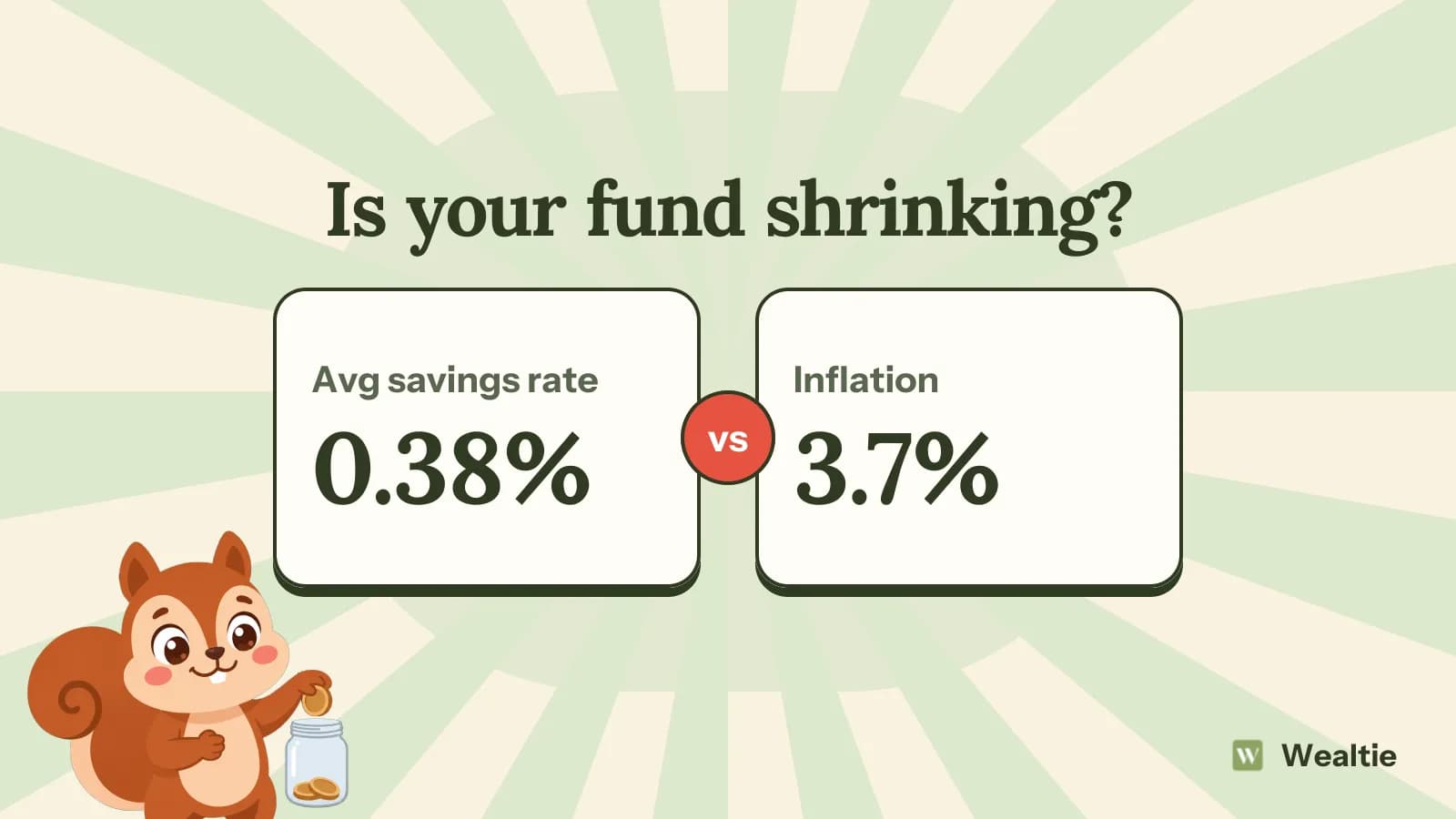
  • Wally dropping a coin into a jar beside 'Is your fund shrinking?', comparing the 0.38% average savings rate with 3.7% inflation.
    SAVING

    Where to keep your emergency fund (and where not to)

    Keep your emergency fund in a separate savings account at an insured bank or credit union, one you can draw on within a few days without a penalty. A high-yield savings or money market deposit account fits. That's where to keep an emergency fund; stocks, money market funds and cash at home are where not to.

    · 5 min read